The kind of work that's so much more than bustin' rocks. (See story at the bottom)
Thursday, November 5, 2015
Learning from Daniel
"If you can't predict the future - and increasingly you can't - action trumps everything."
--From Just Start, by Leonard Schlesinger, Charles Kiefer, and Paul Brown
This isn't a new idea, but it's an easy value to forget among our organization - both among staff and our students. It's so easy for us to overanalyze the unimportant particulars, logically give every excuse under the sun, proclaim that we need more training, and assess every possible situation. It can give us the cover of impressing others by looking super intellectual, smart, logical, and extremely prepared, but the truth is - it's all a facade to hide our deep fears and paralysis around evangelism and all of the unknown the future holds for us.
My colleagues and I have gutted our fall conference in hopes of creating an environment that reverse engineers this over-analytical culture to propel us forward in building God's kingdom and developing followers of Jesus.
That's why the conference has been simply re-named: act.
act:2015 is InterVarsity's discipleship fall conference for students all across upstate NY. We gather together for a weekend in Liverpool, NY (basically in Syracuse) to spend quality time with God off of our campus grounds and be challenged to follow Jesus by taking action, not just thinking about taking action. This year, we focused on the concept of stewardship and studied the book of Daniel to unpack some ways we were called to be stewards of the kingdom of God.
I was asked to teach some of the sessions on Daniel in order to train students to use the inductive study method to study God's Word on their own and within community as well as facilitate discussion around what we find about stewardship in these passages.
I was nervous about teaching the inductive study method in large groups of people, but once we got started and I saw what kinds of observations students were discovering and the connections they were making, it was exciting to see what I learned on my own and what students were learning as well.
Thursday, October 29, 2015
Leaders are Readers: Compelling People
Harry S. Truman said, "Not all readers are leaders, but all leaders
are readers." This 'Leaders are Readers' series highlights books I read
and my reflections on them to bolster my leadership learning as I serve
students on campus.
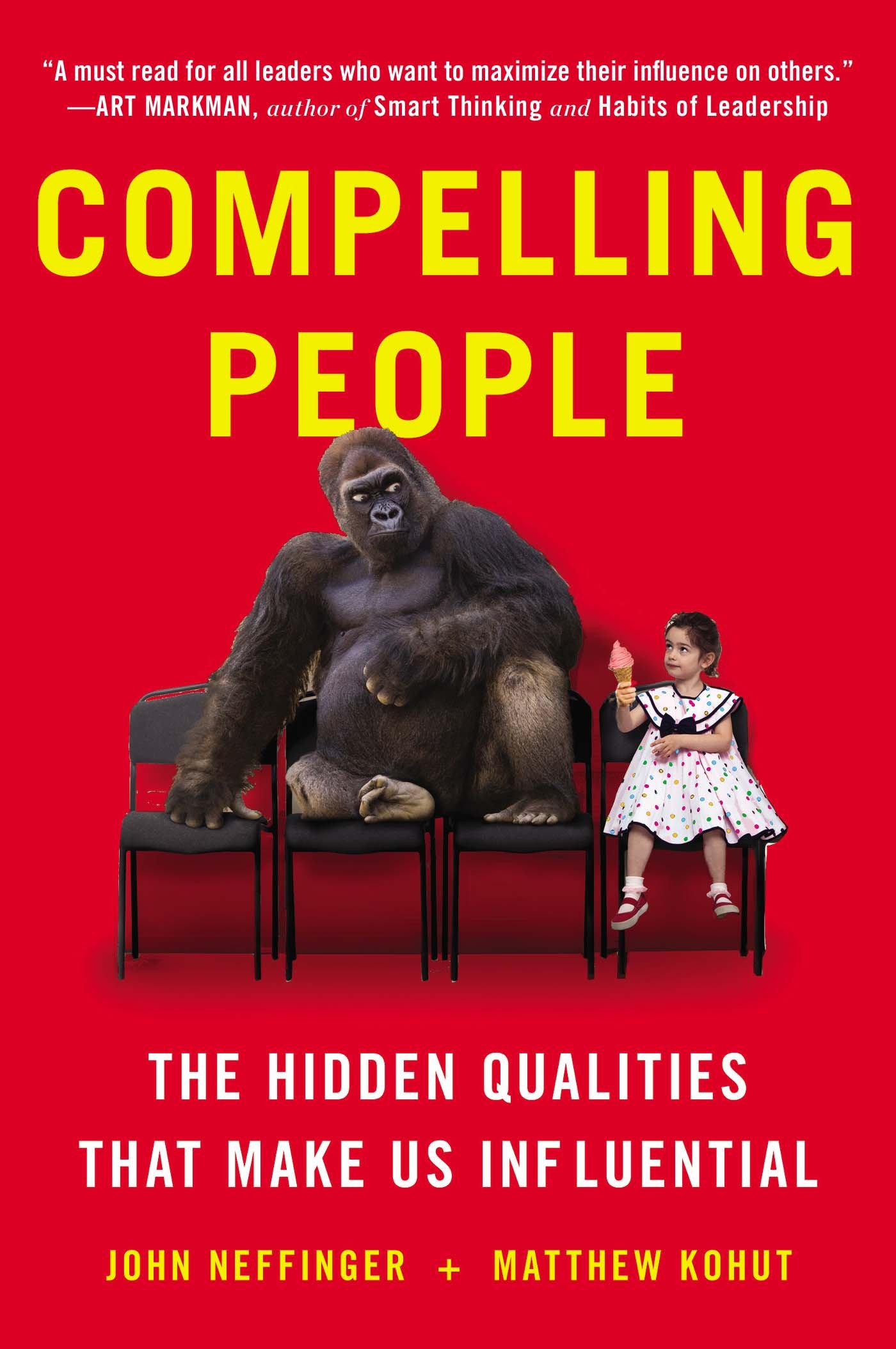
Today's book is: Compelling People - by John Neffinger & Matthew Kohut
Learn more about the basis/premise of the book here.
Introducing the concept of how we project strength (the root of respect) and warmth (the root of affection) was extremely helpful for me to learn.
At first when I was reading, it seemed like I had so much against me with the hand I was dealt as a young Asian-American woman with a nurturing personality bent towards conflict-avoidance and empathy. It also got very overwhelming in the middle to read about the meticulous and multitude of ways that strength and warmth can be imbalanced or mismanaged.
However, overall I think it was good to become a little bit more familiar with the concept with excellent examples of what strength and warmth look like, so that I'm more aware of ways I could grow in managing my strength and warmth. And even if I can't seem to adjust all of the possible imbalances all at once, I think it would be a great reference book for taking next steps.
It was also encouraging as I read to see what aspects of strength and warmth I was already working on and aware of for myself. For example, I've been trying to be conscious about how I dress when I go to campus. I also try to create space to build off of my natural warmth for public speaking engagements, while work intentionally on communicating my confidence and authority to project strength.
Here are some questions I'm reflecting on now that I've finished the read:
1) I've been intentional and conscious of how I project warmth and strength when I'm speaking publicly - how am I doing so when I interact with students on campus on a regular basis?
2) Am I aware of how my student leaders project strength and warmth? How can I help them recognize areas they could learn to manage how they project strength and warmth better?
Why I'd recommend this read to you:
1) It's an overall easy read.
2) I think familiarizing yourself with the concept can be extremely helpful for yourself or for those you may be leading or interacting with. It can be an interesting spring board for discussion around how we judge others, as well.
What I'd be aware of:
1) While it's easy to read, I thought the middle section, Playing the Hand, was really tedious. It definitely slowed down my reading pace.
2) The chapters are long, but the sections are short. Using the table of contents is helpful for future reference.
3) While it's an easy read and the sections are short, it sometimes felt like it was lacking. I wanted to read more about tips or other practical next steps to improve how I manage my strength and warmth.
Thursday, August 20, 2015
Engaging God's power (Regional Staff Conference)
Regional Staff Conference (RSC) is held every summer before classes start. It's a time of InterVarsity from all over the NY/NJ region gathering together to develop leadership skills, renew our vision, and engage in each other's lives face-to-face.
This year, we studied Acts 3-5 together and responded to God through prayer and worship for the first half of the conference.
Typically, in group manuscript/inductive studies, there are lots of helpful application questions to think about, with maybe one or two of them that really resonate with me. If even that.
God, however, seemed to have different plans for me this time around. That's typical God, right?
There were a few application questions that came from each study session of Acts. But as I observed how Peter, John, and the early church of believers responded to their mission and message as witnesses, ALL of the application questions seemed to resonate with importance for me. And being the type of person who needs way more time to reflect on my answers than just the 10 minutes or so we were given, I sensed God saying that I needed to hold on to these questions and spend time working through them with Him at some other time.
Here are a few of the questions I'm tackling with Jesus:
- Where is it that I do not believe the power of the name of Jesus reaches?
- Where have I allowed ignorance to be my god instead of Jesus?
- What could happen and what would be different if I actually believed the name of Jesus held power of everything?
I don't know about you as you read through and think about those questions, but as I've been reflecting on my own answers, I've had to be brutally honest about what my answers really are. It's been interesting to see which questions were easier and which questions were harder to interact with. God has certainly been challenging me to reassess and think critically around how I engage with God's power on campus and in my day-to-day life.
Subscribe to:
Posts (Atom)